Deciding to ride in Morocco takes five minutes. Working out what it actually involves takes longer, and that is usually where people stall. Flights, the bike, the battery, the cold at altitude nobody warns you about, what the price really covers.
This page answers all of it. If you want the why rather than the how, that is the other article.
What the price covers, and what it does not
For the Endu'Rock the Casbah week, CHF 1,890 per person covers: the Swiss Cycling certified guide in French, English or German; the airport transfers to and from Marrakech; the internal transfers, the 4x4 shuttles, the fuel and the professional drivers; the mule shuttles that carry the bikes to the passes; mechanical support; the accommodation; all meals except the last day in Marrakech; mineral water throughout; riding advice; and the photos and videos.
It does not cover: the international flights and airport taxes, extra nights or extensions, bike and equipment rental, your personal insurance (health and accident, cancellation, repatriation), and soft drinks.
So the realistic budget is the trip price plus a flight plus insurance. Everything else on the ground is already paid for.
The flight, and what happens when you land
Marrakech is two and a half hours of flying from Switzerland, with departures from Geneva and Basel depending on the season. Pick a flight that lands in the morning on the first day: the meeting is at nine, and if you arrive later than that you are better off flying in the night before and adding a hotel night.
At the airport, the team is waiting. We build your bike, take charge of your travel case, and the vehicles leave. Two hours of road, and the souk has been replaced by the Berber villages of the Amizmiz region. Your travel case stays with us for the week and comes back for the return flight.
Your bike, or ours
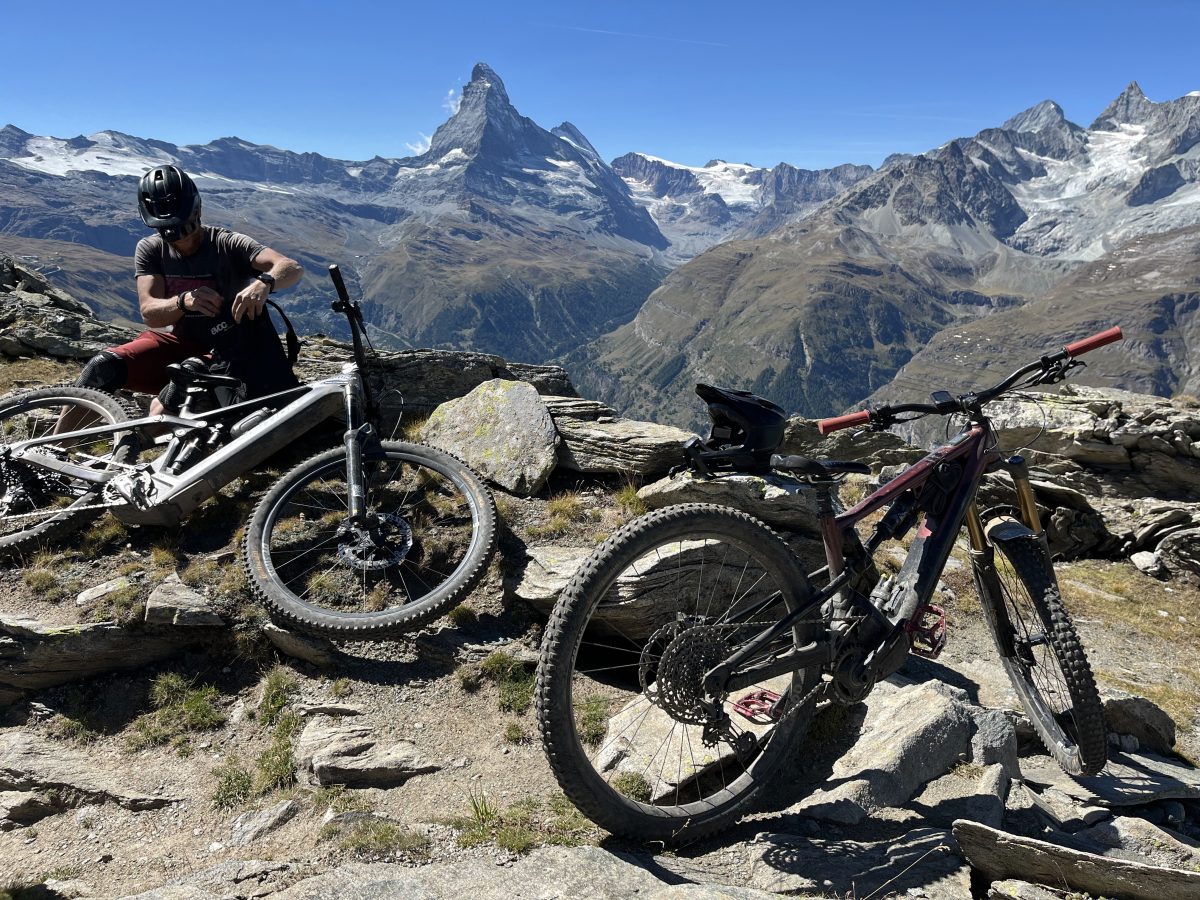
Bringing your own bike is the usual choice, in a travel case or a bike bag, and it is straightforward: the airlines take it as sports luggage, and we handle it from the moment you land.
Renting one of ours on site is the other option, and it removes the whole question of packing, airline fees and reassembly. The rental is an option in the registration form, mountain bike or e-bike.
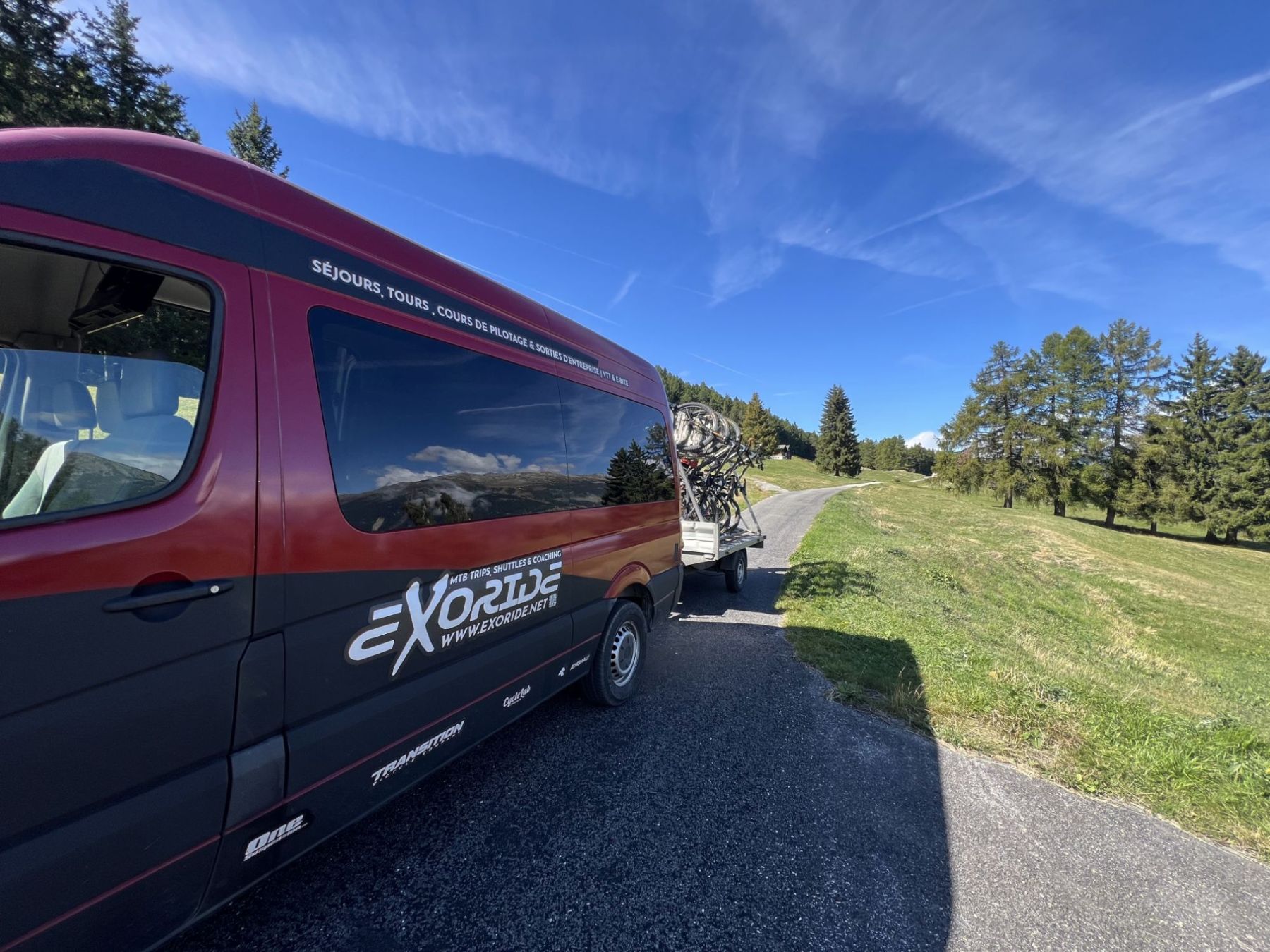
The e-bike case has one complication worth knowing about in advance: an e-bike battery cannot travel on a passenger plane, because it goes far beyond the energy limit airlines accept. Which is why we drive down with our bus and can bring a battery by road, subject to dates and space. We wrote a whole article on that.


Where you sleep, what you eat
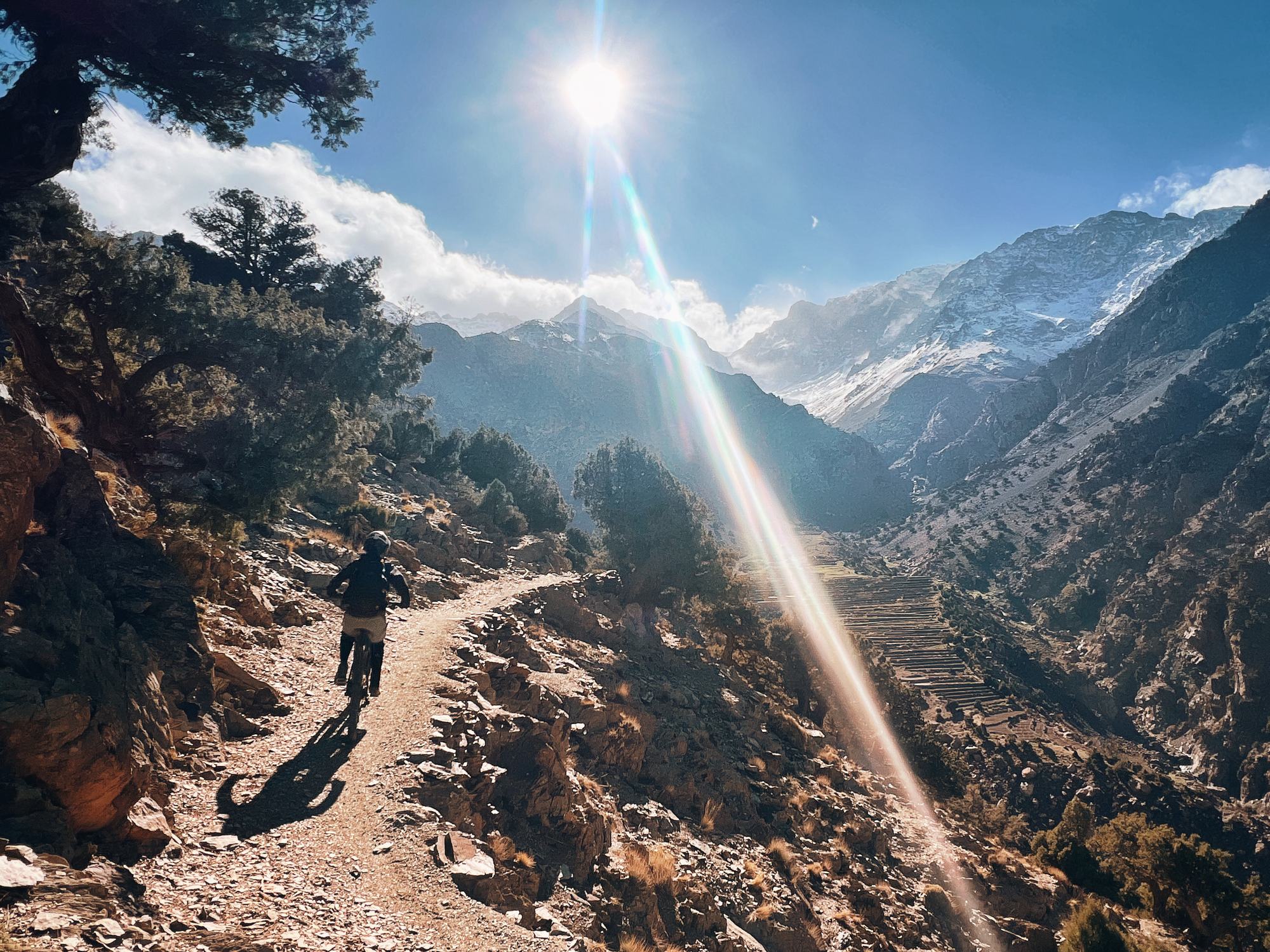
You alternate between comfortable village guesthouses, more traditional but always impeccable, including a night in a renovated sheepfold with a rooftop facing the High Atlas, and charming hotels in the Ourika valley and in Marrakech. Two pools along the way, which your legs will appreciate.
All meals are included except the last day in Marrakech: generous Moroccan cooking, tagines, couscous, brochettes, baghrir in the morning and mint tea, often in people's homes. Mineral water is provided throughout, which in practice means you never buy a bottle.
When to go, and the cold nobody expects
The trip runs from late September to the end of April, which is the good window for the High Atlas: ideal riding temperatures during the day, and a dry climate, though a short spell of rain is always possible and the programme adapts.
What surprises people is the other end of the thermometer. Mornings and evenings at altitude are cold. You will be riding in a jersey at two in the afternoon and looking for a warm jacket at six. Pack for both, because only one of them is obvious from Switzerland in February.
The bag, and three things the regulars bring
Normal riding kit, plus a warm jacket for the starts and the evenings, a swimsuit for the pools, and your toiletries.
Then the part that comes from experience rather than from a packing list. An old blanket to protect your bike on the mules, a roll of gaffer tape, three straps of a metre and a half, and a handful of cable ties. Those items weigh nothing, cost nothing, and every regular carries them. The mules are extraordinary at what they do, but they were not designed with your paintwork in mind.
The level required, and safety
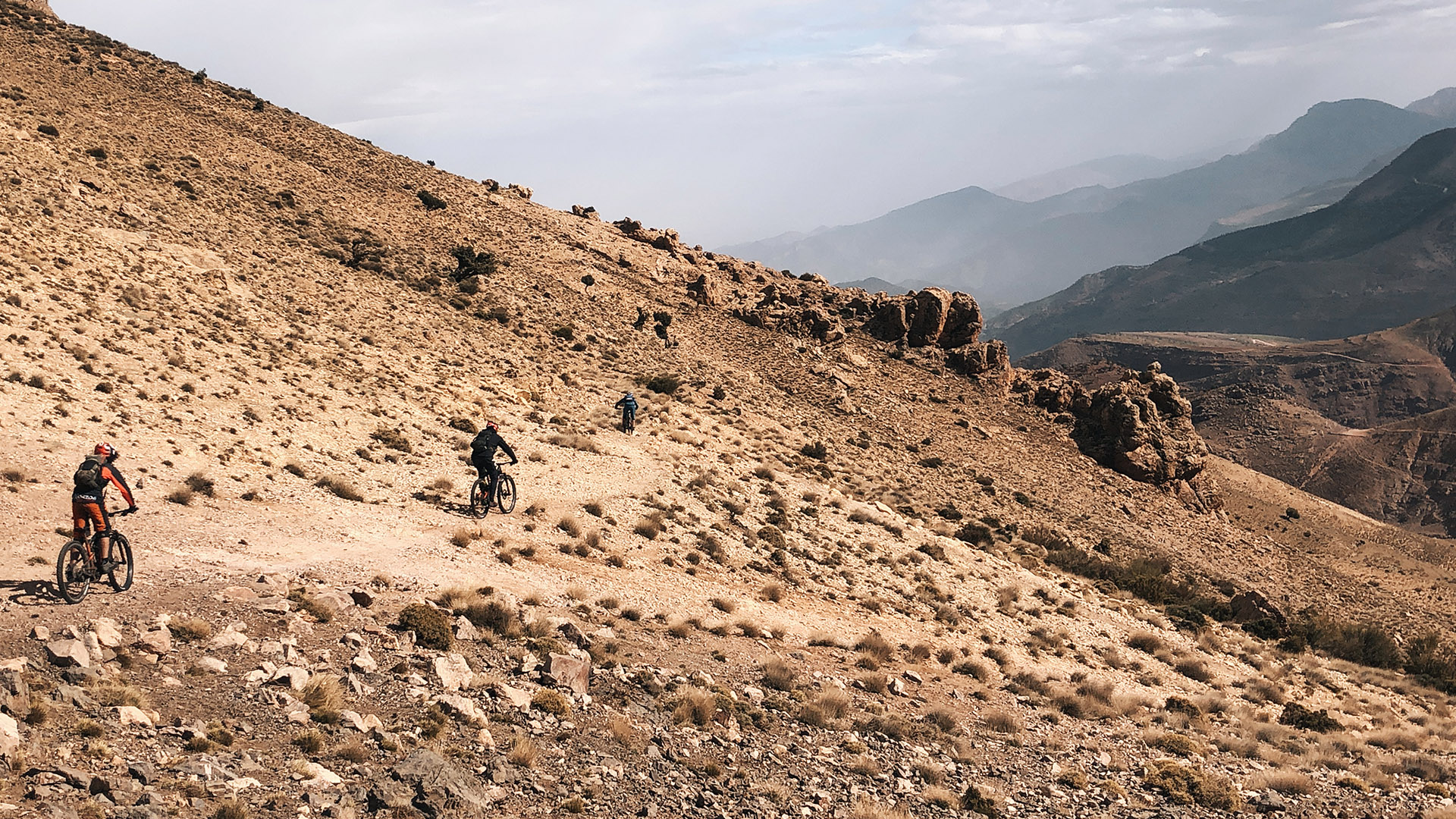
Endu'Rock is rated technical 3 out of 4 and fitness 2 out of 4. The terrain is varied but largely straightforward; the 4x4 shuttles and the mules take most of the climbing out. Mountain experience counts as much as technique. The week comes to 201 km, 2,650 metres of climbing and 13,400 metres of descent, in a group capped at ten riders.
On safety: Morocco is a very safe country and the High Atlas valleys we ride carry no particular risk. The guide has been riding the region for close to fifteen years, the local team knows every valley, and the support 4x4 is never far. If you are unsure where you sit, the levels page settles it, or write to us describing what you usually ride.
Booking
A 30 percent deposit at registration, the balance before departure. Groups stay small and the places go quickly, so book before the flight: the flight will still be there, the place might not.
The dates are online, and a doubt about your level or your equipment is a good reason to write to us before booking rather than after.
Chris